First Flight With My Autism
This is the story of my first long haul flight with my autism fully in control and the surprising events that occurred.
By Jack Penman, February 2026
Preface
Before telling my story, some context will be helpful.
I am male, 53, and was diagnosed with ADHD in the mid 1990s and have been medicated ever since. In February 2025, a change in the medication for my ADHD brought it under much better control. An unexpected side effect was my autism, surfacing from beneath my, no-longer raging, ADHD. This resulted in my formal autism diagnosis in December 2025.
While this may be counterintuitive, after all I was born autistic, it must be borne in mind that up until last year my severe ADHD had essentially suppressed my autism, keeping it hidden from me. This is no longer the case and my autism is very much on an equal footing with my ADHD, if not dominant.
My wife, Fen, is Singaporean and we have two boys, born in Singapore and have flown between New Zealand and Singapore, almost yearly, for 30 years. Thus flying is nothing new to me and has always been deeply enjoyable. Unexpectedly, this changed dramatically on this trip. This time, my newly emboldened autism was in charge, and fully prepared to make its views on air travel known to me, in no uncertain terms. This story is my lived experience of my first long-haul flight as a newly diagnosed autistic/ADHD (AuDHD) adult.
Note: This is my lived autistic travel experience. It doesn’t represent all autistic people. If you want to understand someone’s autism, the best approach is simple: ask them, and listen.
My Autism 101: The Lens for This Story
As is the case with ADHD, no two people experience autism in exactly the same way. So it will help to understand a little about my autism. At its core, it affects how my brain and nervous system process: sound, light, touch and social interactions etc. My brain, compared to a neurotypical one:
- Takes in a lot more sensory information
- Struggles to filter out background noise and information
- Relies heavily on predictability
- Uses significant energy to manage social interactions
- Becomes overwhelmed when too many demands stack up
- Hates uncertainty
All of these affect nervous system regulation. When my nervous system is regulated, I function well. But the wrong type or too much: sound, light, touch or social interactions can cause dysregulation, stress and left un-checked could send me into shutdown or meltdown. More about these later.
While my ADHD played a relatively minor role in this story, it exists alongside my autism and plays a major part in making me me, so to ignore it would be a mistake. My ADHD:
- Makes me very hyperactive
- Likes change and novelty
- Gets easily bored with routine and predictability
- Is time blind
- Likes to socialise
Yes, in many ways, autism and ADHD are opposites, and I have both. Often my ADHD and autism balance each other and I don’t doubt I am better off having them both. Having said that, they can also annoy each other as well, in which case they fight.
For most of you, much of what follows will seem minor. This story is how air travel has changed for me since my autism emerged.
Part 1: Singapore to Sydney
Arriving at Changi Airport
We arrived at Changi around 5:15 pm, and our flight was at 8:00 pm, plenty of time. So I decided to collect a Sunflower lanyard, which is designed to help people with hidden disabilities (like autism and ADHD) in busy, challenging environments.
Spoiler alert: I had no idea how many times my Sunflower lanyard would save me on this trip. I’d done some research and thought I could collect one from any information counter. But when I asked at the check-in desk, they didn’t know what I meant, which hit harder than I expected. Later I found an information desk and asked again. The staff told me I needed to request one in advance, which took me by surprise. Thankfully, I had a spare one (I bought it after my diagnosis), so I used that instead.
Still not the best start.
When Dinner Turns Into Autistic Kryptonite
After check-in, we walked to the staff canteen in Terminal 1, for dinner. Fens’s brother, his wife, and daughter were to meet us there. So far so good, except they were running late. So I’m getting hot, we have a plane to catch and uncertainty was everywhere:
- When will they arrive?
- Will we still have enough time?
- Will they eat here or at home?
- How long will that take?
- Are we cutting it close?
- Why am I so hot?
My brain spiralled through all of the possibilities created by the uncertainty. I couldn’t stand it anymore and I called Winnie (much to Fen’s annoyance). They were already in the terminal; they’d get dinner and take it home to eat. Certainty restored. Autism doesn’t like uncertainty. Looking back, these first two episodes: the lanyard confusion and the dinner uncertainty, cost me more spoons than I realised. What is a spoon you may ask?
Spoons and Why Running Out is Serious
Christine Miserandino, an American writer living with lupus, first coined the term "spoons" as a metaphor for limited energy in 2003. Since then, the concept has been adopted by many neurodivergent people to describe a limited daily supply of physical, mental, and emotional energy. For me, I might start my day with 12 spoons, which are consumed during the day. Normally I have some left by day’s end. For me, having 0 spoons isn't just “I’m tired”. It can mean:
- I lose the ability to process more input
- Small sensory things become unbearable
- I can shutdown or meltdown
- Basic tasks become impossible
So I need to track my spoons to avoid running out. This is complicated by the fact the cost in spoons of a given activity, say going to dinner with friends, can vary widely. On this trip, I was losing them faster than I understood and that’s not good.
Getting on the Gate Lounge (Singapore → Sydney)
To get to the boarding gate lounge for our Sydney flight, we needed to pass through security. There were two lines. The first was shorter and a sign said groups 1 to 3. Looking at my boarding pass, I couldn't find anything about groups so we joined the shorter line, as it appeared the easiest option. The longer line was definitely a high spoon option in my eyes.
Moving closer to the sign, I saw it said “Business Class Priority Boarding”. An unpleasant wave of uncertainty washed over me: Am I in the wrong line? Will I be sent away? Will I have to rejoin the long line? Do I have enough spoons?
When it was finally our turn, I was feeling a mixture of uncertainty and dread. Thankfully the security staff looked at my boarding pass, looked at me, saw the blue metal fidget toy I was playing with (fidget toys help me regulate) and struck up a conversation about it. After which, she allowed us through. The wave of relief was enormous. This was the first of many times my Sunflower lanyard saved me this trip.
When Text Hides in Plain Sight
Remember what I said about not being able to process too much input? Turns out the elusive group number I had been searching for was right under my nose all along.
Once in the gate lounge I finally found the bit about groups in my boarding pass. It said: “GROUP5”, all in one word in caps. Earlier, my literal autism had been looking for the individual word group, followed by a number. So “group 5” would have been fine. But “GROUP5” didn’t match my expectations so I didn’t see it. Autism can be like that.
Smooth Boarding: I Hope
Boarding started with group 0 then 1. Next they called priority group 3. That was it, my brain latched onto the word “priority” and off we went, despite the uncertainty. Getting closer, my anxiety started rising again. Was this going to work? Would we have to go back and board with everyone else? All 200+ of them? Our turn came, and the gate staff looked at my boarding pass and allowed us through. What a relief.
Fen later told me that, unknown to me, the gate staff looked at my Sunflower lanyard, pointed at it, and then waved us through. That may sound like a small thing. For me, it wasn’t small at all. Another save for the Sunflower.
Why the Small Things Matter So Much to Autistic People
You might be thinking: He’s just boarding a plane, what’s so hard about that?
But for many autistic people, me included, boarding isn’t “just boarding.” It’s an avalanche of:
- Crowds and unpredictable movement
- Tight spaces and physical bottlenecks
- Social rules and invisible expectations
- Time pressure
- Executive-function load (managing bags, seat, instructions)
- Overwhelming sensory input
Neurotypical brains filter a lot of sensory noise automatically and at low cost. Mine doesn’t. So everything arrives all at once: sound, movement, light, people, pressure, expectations, greatly increasing my mental load. This sensory overload stacks on top of what came before. It's cumulative, and doesn’t reset after each event. New demands use more spoons.
Early boarding meant I didn’t have to move into an overwhelming environment. Instead, I entered a calm empty cabin, no crush of people, no overwhelm. That saved me many spoons. And gave me the space I needed. Small things like this help more than most people realise.
On the Plane (Singapore → Sydney)
Seated on the plane, things calmed down at last. We should have departed at 8:00 pm but ended up leaving at 9:00 pm, another unexpected change. I took my ADHD medication as soon as we got on the plane; when you're as hyperactive as I am, being unmedicated on a plane for 7 hours is the stuff of nightmares. I hoped this flight may be a chance to regain some of the spoons I lost earlier.
I listened to the same playlist for 90% of the flight, as my autism loves the predictability that repetition brings. My Sony ULT Wear Active Noise-Cancelling (ANC) headphones skilfully protected me from the unceasing cabin noise. Sound is a huge issue for me. Especially the all surrounding, continuous type like that found in aircraft cabins. Over time this type of sound makes me pay a very high price and can help push me into shutdown or a meltdown. Thus flying without my ANC headphones is simply not an option and I always carry a spare pair, just in case.
I tried sleeping in all sorts of strange and seemingly contorted positions. Many neurodivergent people can have difficulty sleeping or sitting on a chair in conventional ways. You should see me on a chair. Add to this trying to sit still for extended periods of time and it can literally become painful. Comfort is relative really. When I wasn’t trying to rest, I drank lots of water and ate plenty of nice food. An hour or so out of Sydney, I thought maybe I was doing Ok and replenishing some my spoons.
I was so wrong. And this is what first tipped me off:
Why is it Suddenly So Hard to Pee?
Bet you weren't expecting this heading; I certainly wasn’t. Later on I needed to pee. No problem right? Except… I couldn’t. Thankfully, I eventually managed—after an ungodly amount of time. I’ve been flying my entire life, never had an issue peeing on a plane. Until now.
I remember thinking: Why is this happening? I know I’m pee-shy, but I was in a completely empty airline toilet! Pee-shy person's paradise. This came back to haunt me big time on the flight to Wellington.
Turns Out My System Isn’t Happy!
Once home, I did some research and in simple terms, your nervous system needs to believe there are no imminent threats before it will fully relax and let you pee. So while I thought I was doing Ok, in reality my system was clearly in high vigilance sensory threat mode (fight/flight/freeze). I knew and could clearly feel I needed to pee, but my body wouldn’t cooperate.
For some autistic people, especially during overload, stress can show up in physical ways like this. The body stays braced. It doesn’t fully switch into safe mode. In my case, it felt like my system was refusing to believe it was safe to let its guard down. At the time, I didn’t have enough spoons to worry about it.
My Bad Interoception Hides Stuff From Me
Most people can rely, with a high level of confidence, on the signals they receive from their bodies. Common amongst these are: hunger, thirst, anxiety, nausea, temperature, pain, needing the toilet, and so on. This ability is called interoception and refers to the brain’s ability to sense what’s happening inside the body. For many neurodivergent people, including me, interoception doesn’t always work the way it should.
My body might be sending signals, for example, that I’m hungry, but my brain doesn’t always interpret or present those signals properly. For example, I might feel sick but in reality I’m actually hungry and my brain misinterprets the signals, so I feel sick instead of hungry. Other times I don’t get them at all or they're very weak, making interpreting them very difficult. I might be absolutely starving, yet I only get a slight hunger signal. An added complication is that the signal I perceive doesn’t always convey the urgency of the underlying cause. Alternatively the signal I get may be way stronger than the underlying cause actually demands.
It’s not that the signals aren’t happening. They just don’t always reach conscious awareness in time or at the right level. This makes it difficult for me to accurately read what’s going on in my body, let alone understand what’s coming from stress, autism, ADHD, or something else entirely. So feeling “Ok” doesn’t always mean I’m Ok.
Arriving at Sydney Airport
We finally arrived at Sydney Airport and, on the surface, I seemed alright. If you had asked me, I probably would have said I was “Ok”. In reality: my spoons were low, my nervous system wasn’t in a good place and I had almost no sleep.
Upon leaving the plane, the first thing that struck me was the terminal layout had changed, due to renovations. This threw me completely. I no longer had past experience to guide me. My precious certainty evaporated, replaced by a cloud of new uncertainty. For my nervous system, uncertainty is kryptonite and things were about to get worse.
Security Made Me Very Insecure
We eventually found our way to security screening, despite one wrong turn. On previous trips my ADHD powered me through, this time, autism was calling the shots, and for autism, knowing the rules beforehand is everything. So once in the security queue, I watched the people ahead of us like a hawk; I needed to understand the instructions and see exactly what they were doing. Did I need to take out the laptops? No. Big relief. Did I need to remove my boots? Yes……
For me, and many other autistic people, going into situations where there’s pressure, urgency, crowds, and other people expecting you to just “know what to do”, when you don’t, is deeply stressful. Our turn, I felt calmer, not because the environment had calmed, but because I knew what was expected of me.
Through all of this, I was surrounded by the usual airport chaos: people everywhere, unfamiliar sounds seemingly echoing off everything, bright lights, constant movement. A steady urgency drove everything forward.
For me, contrasting sensory inputs, such as those produced by a bright patch of light against shadow, wind blowing on exposed skin, the feel of certain fabrics, can be intensely noticeable, even painful and deeply dysregulating. Individually these sensations are minor, combined, they can stack upon each other, bringing my nervous system closer to dysregulation and ultimately shutdown or meltdown. By this time my system was already close, I just didn’t realise how close.
Autistic Shutdowns
Before I go any further, it helps to understand autistic shutdowns. When an autistic nervous system becomes so overwhelmed beyond its limits, it doesn’t always explode outward, instead it can turn inward, resulting in shutdown.
This is the brain's means of protecting itself, when the demands placed upon it far exceed its capacity. Think of your web browser, with too many open tabs, opening more eventually pushes it beyond available resources and it gradually slows to a crawl, ultimately stopping altogether. For the user the result is a dead web browser, internally the computer is drowning in a storm of data and demands it simply can’t deal with. The only effective cure is to reduce the load by closing tabs.
Shutdowns are more common for me than the more dramatic meltdowns (which I’ll describe later). My shutdowns can look like this:
- I start to go quiet. The world outside begins to wash over me
- Reading becomes almost impossible. I can see the words clearly. I just can’t do anything with them
- My thinking slows. Talking becomes harder
- Processing what people are saying becomes harder and harder until I can’t do it anymore
- Responding takes far more energy than it should
- Movement becomes a lot of extra effort
From the outside, I may look calm, inside, my system is overloaded and conserving what little capacity I have left. This often happens in demanding social settings such as restaurants where there are many people, lots of random noise, and social expectations. Shutting down is my nervous system trying to survive. It’s not a conscious choice on my part.
And at security in Sydney Airport, I was getting close to shutting down.
I want to be very clear: none of what follows was the fault of the security staff. They were professional and kind, all while keeping us safe, and I love that. It’s just that my autistic version of “safety” feels very different, which is nobody's fault.
The Shock of Sound
It was our turn at security, and I wasn’t ready for what happened next. I put our bags on the X-ray conveyor and stepped forward. An officer stopped me and asked me to remove my headphones, as I had forgotten I was even wearing them, so I removed them. Only to be greeted by an almost physically painful cacophony of sound that hit me like a sledgehammer. Passengers talking. Keys clanging. Phones and belts striking plastic trays. Conveyor rollers. Bags shifting. Security officers instructing. Unseen machines humming. It wasn’t just loud. It was layered, chaotic, inescapable, and I hated it.
The intense sound, coming at me like a blizzard, only intensified my feelings of drowning in a sensory whirlpool. And this was only the beginning.
With the bags on their way, my next stop was the body scanner.
My Body Detaching & Slowing Down
Arriving at the body scanner, I stood in front of it and my world started to become very strange. I began to feel I was somehow detached from my own body and the outside world. Everything seemed to move in slow motion. Instructions from the security people arrived like wet cement, with me digging with my hands, trying to get at what they wanted me to do.
The scanner picked up something on my shoulder and the officer was asking me for permission to pat me down. It was only after his third attempt that I managed to figure out what he wanted of me and I said yes.
Everything seemed to take so much extra effort. At that point, the only thing I cared about was getting my ANC headphones back, to get me out of the hellish sound storm I was in. Thankfully I was reunited with my headphones in short order and was recovering my composure a little. But the next bit still surprised me.
With the body scan done, I went to collect my bags from X-ray. One needed further checking, so I went to the X-ray guy. As soon as I saw the X-ray images of my bag and the cool way in which he could fly around it in 3D, my nerdy ADHD took over and was in heaven.
This gave my overloaded autism a rest. And my brain was so grateful for the temporary distraction. To put this in perspective: had my dysregulation been any worse before we reached security, removing my headphones might have tipped me fully into shutdown, rendering me an unresponsive, silent mess.
Part 2: Sydney to Wellington New Zealand
Information Under-load is Almost as Bad
Having cleared security, we checked the departure board, our flight was there. But no boarding gate was listed! Instead, the gate number wouldn’t be announced until five minutes before boarding, again more uncertainty = autistic kryptonite. Past experience suggested we could find out more at the information desk, so off we went. The staff there were very helpful. At first, they weren’t very specific, and told us the gate would be announced five minutes before boarding, same as the departure board.
Thankfully, once I explained I was autistic and this wasn’t just a convenience thing but an urgent need for certainty. They were great and pointed out where the gates were, how to get there and how long it would take to walk.
Certainty is Regulation
For my autistic brain, generalisations about directions are not an option. I need to know exactly how to get there, every turn along the way and exactly how long it will take. Simply saying, “Walk that way and turn left” won’t cut it. Once again, the extra help the friendly staff gave me made such a difference because it removed a stack of uncertainty from my already overloaded brain.
With that out of the way, I asked if there was a sensory room I could use in the meantime, as I was feeling overwhelmed and craved somewhere quiet and dim. As luck would have it, there is a brand new sensory room. But it won't be ready for another three weeks! Oh well. Ever helpful, they pointed out the quieter parts of the airport, one of which was a McDonald’s. Again, they made a big difference. Sitting at a McDonald’s, in a calmer and quieter part of the terminal, gave my system a chance to calm down and rest a while. It’s the McDonald’s near the travelator, not the one inside.
The Dry Tablet Incident
By now, I needed another dose of my ADHD medication which was four capsules. In my dysregulated state, I got them, checked they were correct, and dumped them in my mouth. Only to discover I had emptied my water bottle at security!
Having a mouth full of medication and no water to wash it down is not fun.
Getting to the Gate
With little time remaining, we made our way to the gate. Historically, the period before boarding a flight has always been stressful for me. I’m not sure why–it just is. In the past, my ADHD was in charge and powered me through the uncertainty, while my bad interoception protected me from the sensory nightmare surrounding me. This time, my autism was in charge and my bad interoception was now my improved, more aware interoception, a perfect storm.
So, upon reaching the gate I was feeling overwhelmed, anxious, my senses were working overtime and my spoons were getting low. I saw a sign which said “gate open” and all of a sudden, I thought: Wait, does that mean we need to go through the gate right now? The sign says it's open. (My autism has a very literal nature).
New uncertainty, more questions.
When Asking a Question is Like Climbing Everest
Now I had a question, and I needed the courage to seek an answer from the gate staff. This took far more effort than I care to admit. The first time I got halfway and had to turn back.
For an already overwhelmed autistic person, the additional effort required for simple tasks like asking a question or seeking help can feel like climbing Mount Everest. This is because, in reality, asking a question is a complex process involving interacting with others, talking, processing replies, and sensory processing; skills I was already struggling with.
The second attempt was more successful. Yes, this was the right gate. And no, just because the sign said the gate was open didn’t mean we needed to go through now. Ok, I knew we were in the right place and what was next. Certainty restored.
My newly won certainty was short-lived, with the announcement: our gate had changed and was now in a different place. Ok, it was on the floor below us, for me, it might as well have been back in Singapore. I was back to starting from scratch, with five minutes to board! Again, for most people this is a trivial change. For me, it felt like Everest itself lay between me and my plane.
The gate staff said we had to take an escalator to our right. But when I looked to my right, there was no escalator, just lifts. So I got in the lift with the other people and went down. All the while, sensory input and uncertainty were stacking upon each other, pressing down on my already overloaded brain. We arrived at the floor below. Our new gate was Gate G.
Boarding By Groups Part Two
Having finally arrived at our gate, group boarding began, business class and priority passengers first. By now I was fighting the urge to burst into tears. My spoons were almost gone. I was totally dysregulated and it was just too much for me. I was clinging on for dear life. By the time boarding started, I was running on empty and just stood in front of the gate, and looked at the gate agent like she was the last person on the face of the planet.
I was paralysed and desperate at the same time.
I can’t begin to describe the wave of relief that flooded my body when she pointed straight at me and motioned me to board along with the business class passengers. If I’d had to wait and board in group 5, as I theoretically should have, I probably would have just lost it and burst into tears on the spot.
Once again my Sunflower lanyard did its magic and saved me from the abyss. And it did so by speaking for me, when I couldn’t, because the added effort of having to speak could easily have sent me over the edge.
At the time I didn’t realise that the strong desire to burst into tears in a ball was in reality my system edging towards a meltdown. Remember, I was only diagnosed with autism a few months prior to this trip and my understanding of autism was still very limited.
When Rain Drops Feel Like Bullets
With Fen following me, we walked along the tarmac to the plane as there was no air bridge. Every sound, even that of the jets, which I normally love being a total plane nerd, was digging at me. There was a light drizzle of rain and each drop felt magnified and singular as it hit my face, each drop seemed to stack upon the ones before, adding to my already overflowing world. Light from the sun, glare from the clouds, the bee hive-like activity on the tarmac, every bit of sensory input was now flooding in, unfiltered.
Climbing the stairs to the plane was torture. Each time the lady ahead of me stopped, a little more of my dwindling mental energy was sapped away. Bringing me closer to the meltdown I was so desperately trying to avoid.
I finally got to the top of the stairs and I think it was then the stewardesses must have seen the pitiable state I was in. Another looked at my boarding pass and seemed like she was about to query why an economy class passenger was boarding with business class, when she saw my Sunflower lanyard and once again it saved me.
The relief of settling into an empty economy class cabin was so good for me. It gave me the space I needed to get myself together, while giving my brain the short rest it so desperately needed.
Wife? What Wife?
Looking back, the gate agent staff just seemed to know Fen, my wife, was with me, that we were a unit. Because, at the time, I was putting all my effort into keeping myself together. I simply didn’t have the spare capacity to ask if my wife could please come with me.
In reviewing my story I noticed a great deal of “me” and “my” and very little of “us”. This is not a sign of autistic selfishness or a lack of kinship with my wife. Instead, it's a sign of an autistic person so overwhelmed they simply didn’t have enough capacity to worry about another human being. It’s purely a case of survival, not bad manners.
It's like a computer running at 100% capacity just to keep the operating system running. It can't open any new programs, let alone run complex tasks like managing social interactions and advocating for another person, no matter how much it loves them.
Once on the plane to Wellington, I hoped to settle down and recover a little. Alas it wasn’t to be.
My Sensory Jenga Tower Just Keeps Stacking Up
Looking back, a clear pattern was emerging as my journey progressed. I thought I was finally relaxing a little and recovering some spoons. In reality, my sensory Jenga tower was becoming taller and more precariously complex. This shouldn’t have surprised me, but I’m new to autism and traversing uncharted territory.
Part of this stems from sensory processing being very costly in terms of brain power, especially for me. So all along I was getting more depleted, but my system wasn’t alerting me properly. This was thanks to my poor interoception. Which, unhelpfully, gets worse as the strain increases, I was flying blind into a storm.
Thus, having settled into my seat, I got a strong reminder all wasn’t well…
Now I Can’t Pee At All!
I went to the back of the plane and asked the flight attendants if it was OK for me to use the toilet before takeoff and they said fine. So off I went with a sense of urgency. The other passengers had started boarding, so there was no real time pressure, although I was a little worried the aisle would become blocked.
I feel like I’m doing “better”, so peeing should be fine, yes? Nope. Try as I might, I simply could not pee. Ok, I thought: same thing as before, I’ll just give it more time. I waited longer, to the point I was worried the stewardess might think I’d died on the toilet. But still no pee! By this time I was getting very frustrated and gave up. I’ll try again later.
Delays = More Sensory Overload
Our flight time was to be 2 hours, 10 minutes. That doesn’t seem so bad. Alas, one sick passenger and 45 mins later, we finally took off. So now my flight was closer to 3 hours, which in my state just meant even more sensory overload.
Finally Airborne: Surely It Can’t Get Any Worse?
No such luck. Because of the strain my system was already under, things that seemed tolerable earlier suddenly felt sharper, louder, brighter, and just plain harder. The environment didn’t change, my nervous system did. My brain was slowly losing what little filtering ability it had left, and the remaining buffer between me and my environment was dissolving.
The glare from the sun on the clouds, streaming through Fen’s open window blind was too much, so she closed it. The cabin noise felt more intense than before. And I don’t mean the expected difference between a Boeing 777 vs 737, this was more intense and penetrating.
The extra loudness made me think my ANC headphones may have flipped out of noise cancelling mode. I sometimes do that by mistake. Nope they were working fine. The cabin noise and engine background drone was impacting me way more than before. Tellingly, as my remaining buffer dissolved, my other senses were heading for a similar state.
My Charge is Low and the Bank is Closed!?
I checked my headphones' charge, 70%, fine… then 60%. I started to have a mini panic. What happens if they go flat before we land and I have to go through passport control, customs, with no headphones! But I have my spare pair in my bag. I can use those, but no they aren’t as good as these ones. Will they be able to protect me?
Then I thought, OK I can charge the ones I’m wearing for a bit. But the stewardess said, before takeoff, we are not allowed to use power banks at any time during the flight… And on went the storm in my head. Once back in NZ, I checked, and it seems my tired brain got it the wrong way around: no, you can’t charge a power bank on the plane, yes you can use them to charge a device. Did I mention I have dyslexia as well.
When my autism is dysregulated and my sensory system is overloaded, seemingly small things, like the charge on my headphones, can balloon into huge internal dramas adding to the stress I’m already under. This is one scenario where my hyperactive ADHD chimes in by turbo-charging the whole process, making it worse. When I’m regulated the difference between my two sets of ANC headphones is not that big of a deal.
Airline Food When You're in Autistic Overload
As a result of autistic sensory overload, sensory stuff gets even more amplified by my brain, thus feeling more intense than before.
The passenger to my left had a special meal. When she opened it, the smell was almost overpowering. It didn’t just smell strong, it kind of felt really strong, too. Again, I’ve never had this issue on a plane before.
Being more aware of how my system was behaving, I chose the vegetarian meal, as the safest option. Once my food arrived I could only eat about a quarter, before I was forced to stop. Don’t get me wrong, the food tasted quite nice. I just couldn’t handle the intensity of the flavours in my mouth. Some plain-ish crackers were about all I could stand. Again, all of my senses just seemed to be in overdrive.
I dared not drink too much as I still had a full bladder, so I settled for a can of lemonade, figuring the sugar might help.
Why Autistic Safe Foods Are Safe
This brings me to the happy subject of autistic safe or comfort foods. These are foods and/or snacks that many autistic people rely on as a safe source of nutrition when they are in sensory overload, dysregulation or teetering on or in shutdown/meltdown. It's not just food I like. It's food that won't hurt me, won't surprise me, won't demand anything from me. Food I can trust when I can't trust anything else, including my own nervous system.
They tend to involve simple flavours and textures. My safe food is peanut butter sandwiches. These are something I know I can eat no matter how badly my autism is doing. And that's important because they also help me with regulation.
My Interoception Makes Describing Feelings a Challenge
For me, and many autistic people, unreliable interoception makes it hard to describe what's happening in my body and how I’m feeling. Consequently, some of the ways in which I describe my perceptions can seem odd, almost bizarre. But that’s often the only way I can express how things are for me in my world.
It’s also the reason behind why we get it wrong much of the time. And that, in turn, can make it harder for others to fully understand what's going on when we’re in distress, this can make helping a potentially challenging experience.
The Stewardess and Joey Club Toy That Saved Me
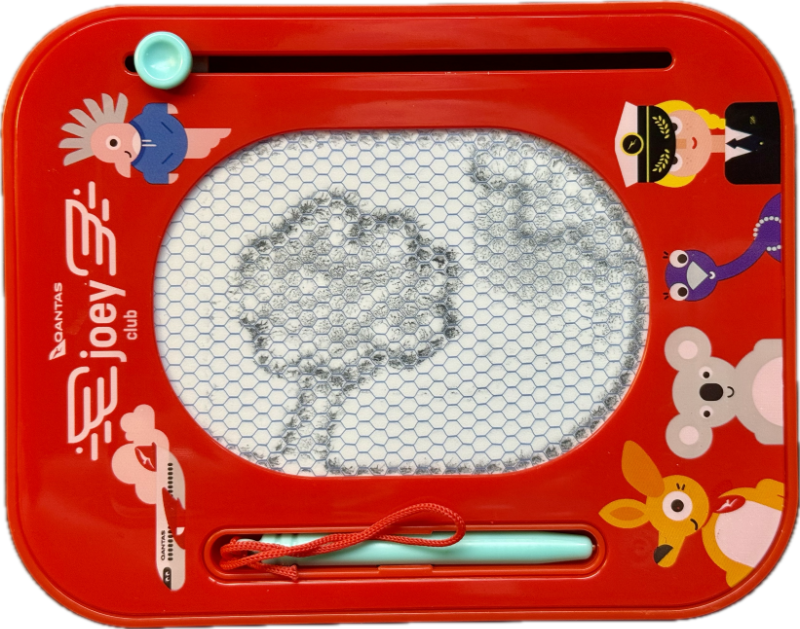
This single event was the absolute highlight of the entire flight. A stewardess came down the cabin, passing out toy packs for the children. She stopped at our row, but there were no children?
She passed me one of the toy packs saying, “This might help.”
I can't tell you how much that simple gesture meant to me. Someone had seen my struggles and made me feel seen and cared for.
The toy was a magnetic drawing pad and I spent a good 20 minutes nerding out, trying to discover how I could make lines with different shades of grey. This welcome distraction gave my brain the short rest it so desperately needed. I will never forget her kindness that day.
Now Even People’s Faces Are Too Much
Making eye contact, for many autistic people, including me, is very unpleasant and something I actively avoid. Looking at faces is generally fine for me, in fact I often have to, because I frequently augment my hearing with lip reading due to my Auditory Processing Disorder (APD). But that’s another story.
For the last part of the flight, my autism didn’t even want to look at people's faces, let alone their eyes! It was just too much mental effort, so when anyone came near, I simply looked down. It sounds dramatic, but really it’s not. Because when you look at someone's face your brain is:
- Processing eye contact
- Reading micro-expressions
- Tracking emotional tone
- Preparing a social response
- Regulating your own expression
- Masking or managing expectations
That’s a huge additional cognitive and emotional load, especially for a system already struggling. So my nervous system did the most efficient thing it could: it removed the entire social processing layer. Avoiding faces, looking down, looking at nothing, soft focus. These are all classic autistic self-regulation strategies, especially during overload.
I Still Can’t Pee and I Really Need To!
Yup, we’re on the potty talk again. Once the meal service was cleared, I went to the toilet again, hoping to empty my rather full bladder. But no luck, same problem. Only worse this time, because I managed to do a poo, but for the life of me, I could not pee. That was so frustrating.
Another first for me. This trip has way too many firsts! After that I resolved: no matter how bad I needed to pee, I was NOT going to try on the plane again, and my bladder would just have to bloody well wait until we landed.
Nuclear and Autistic Meltdowns
Metaphorically speaking, nuclear meltdowns and autistic meltdowns share certain similarities. No one wants a meltdown, and they are not a choice. Both occur when control systems can no longer do their job. They can be difficult to predict, and once started, stopping them is almost impossible. Trying to force control often makes things worse. Preventing them requires constant effort. They may unfold slowly and internally, or erupt outwardly and dramatically, and you don’t get to choose which kind you experience.
The metaphor ends here. An autistic meltdown is an involuntary nervous system response that happens when an autistic person becomes overwhelmed beyond their ability to cope. It is not a tantrum, not attention-seeking, and not a choice. It is the brain and body entering overload and temporarily losing the ability to regulate emotions, behaviour, and responses.
For me, meltdowns tend to make me an unresponsive, crying ball, unable to process the world around me, and my communication is laboured at best. If I absolutely have to I can probably move and respond to very basic instructions. For others, however, the meltdown is all-consuming and they effectively disconnect entirely from the outside world. They may react strongly or defensively to verbal or physical contact, no matter how well intentioned.
Meltdowns can be very physical and dramatic, often mistaken for a tantrum, or bad behaviour. Believe me, they are neither. They are not something you can just turn off.
Research has shown tears contain stress hormones and toxins built up when the body is overwhelmed & stressed. And crying helps remove them. That’s why you often feel better after a good cry: your body is designed to work that way. It’s not weakness, it’s biology.
Trying Not To Crash While Landing
As we were coming into land, I was fighting a meltdown. Pure and simple. Even the smallest things just felt too much for me. Everything was overwhelming and I didn’t have the spoons nor capacity to deal with them.
I just wanted to be somewhere dim and quiet so I could meltdown in tears. At the time I was experiencing this, I had no idea I was heading towards a massive autistic meltdown. I was putting all of my remaining resources into fighting an enemy I didn’t understand, in front of a crowd I didn’t want to disturb.
When Rehearsing Conversations is Not So Good
A common trait of autism is rehearsing conversations before we have them. Even trivial ones, like the time I wanted to borrow a USB cable from my son. I literally practiced the entire conversation, in my head beforehand, refined it, and eventually settled on what I was going to say. All that, just to ask if I could borrow a USB cable from my own son.
We do this to help deal with the uncertainty social interactions hold for many autistic people, including me. Rehearsing conversations gives us a chance to build up the confidence we need and it helps to lower the cognitive load.
I wanted to thank the stewardess, who gave me the toy, so, as we were landing, I was rehearsing what to say. It went something like: “Hi I’m autistic and was really struggling, and I wanted to thank you so much for the toy you gave me because it helped.”
The problem was that each time I rehearsed what I was going to say, it brought my meltdown closer and closer. And of course my brain got stuck in a mini-loop of rehearsing what to say, meltdown looming closer, repeated over and over. These thought loops are also a relatively common autistic trait.
The only thing that stopped me from melting down there and then was squeezing the shit out of my big foam dice, trying to breathe deep and the thought: I didn’t want to look like an idiot on the plane, bawling my eyes out in front of the other passengers. I was an emotional mess desperately trying to not look like an emotional mess.
Banishing Imposter Syndrome
With all that was going on, part of me was thinking: was I just winding myself up and being a drama queen? Maybe it wasn’t as bad as I was making it out to be? Of course, if I kept on thinking about thanking the stewardess and hoping I didn’t meltdown, I was going to end up winding myself up even more!
Fortunately, I quickly realised I was the one desperately fighting against myself to NOT meltdown, in front of a plane load of passengers. So on the one side, I had my autism screaming at me for help and relief and on the other, the terror of being exposed as some kind of imposter crybaby.
Imposter syndrome is when, despite having been diagnosed and absolutely knowing you are autistic, doubt creeps in and makes you question the legitimacy of your autism diagnosis. You feel like an imposter, a fake. This is a very real, and potentially debilitating feeling, which thankfully I was able to quickly crush. Others are not so lucky.
Autistic Child Needing Reassurance
At other times, my autism felt like a small, frightened child needing reassurance that everything would be okay. What I really wanted was to be in a quiet, dim, plain room by myself and simply exist. That feeling rode the waves of my overwhelm, alongside the constant edging towards meltdown and the insecurity it brings.
Now Small Things Can Kill My Shaky Mask
We are five minutes or so away from landing, and my entire being is doggedly focused on desperately trying to look normal for the outside world, all the while my inner world was imploding. I was so vulnerable that even the smallest thing would have torn away my mask, sending me into total meltdown, plane full of people or not.
Masking is the process used by autistic people, consciously or unconsciously, to hide their autistic traits in an attempt to fit in with society's neurotypical expectations of how ‘normal’ people should act. We are essentially performing "being normal". Suppressing stims, forcing eye contact, mimicking social cues, rehearsing conversations, analysing others’ behaviour in an attempt to understand how normal people do stuff, all to avoid being considered not normal.
Masking is mentally costly and can lead to exhaustion, burnout, and the loss of your true identity in a sea of performance, all for other people. Many autistic people mask so well, they don't realise they're doing it. Until it finally becomes too much and they can’t keep it up anymore. Masking goes some way towards explaining why 90% of autistic adults, under the age of 40, in the UK remain un-diagnosed. Doubtless the figures in other countries are similar.
And that’s important. Some autistic people are very good at masking their internal distress until that little bit extra arrives and they just spiral into meltdown. To an outsider this can seem very sudden and out of nowhere, but for the autistic person, it’s been building for hours, maybe even days or weeks. These disproportionate, even explosive reactions to seemingly trivial events can result in the autistic person being made to feel they are overreacting, attention-seeking or simply being dramatic.
Best Landing Ever
I have always loved takeoffs and landings, but this landing was especially good. The best. Because I managed to keep my shit together.
How the Mundane Can Help
What came next surprised me. I was still in the shadow of the meltdown and knew it. Yet the seemingly mundane chores of retrieving the bags from the overhead locker, waiting at the back of the plane as others disembarked, the awkward walk down the cabin, our goodbyes to the crew, descending the air stairs, and the stroll to the terminal all conspired to give my brain the brief respite it so desperately needed, bringing me back from the brink.
I wasn’t out of the woods, but I was finally getting some of my spoons back and my sensory system seemed to be calming down. In reality, short breaks like getting off the plane, and before that, playing with my new toy, do something very important: they reduce cognitive load and allow my nervous system to downshift, even if only for a while.
The simplicity and predictability mundane tasks provide matters. It reduces uncertainty. It lowers the number of competing inputs. It gives my executive system one manageable job instead of fifty competing ones. The toy helped for the same reason.
These moments don’t fix overload. But they interrupt the escalation and can gently shift my brain away from threat mode, back toward regulation. And sometimes, an interruption is enough to stop a meltdown.
Yay, I Can Finally Pee!
Once in the terminal: destination toilet! And I wasn’t coming out until I’d done my pee. And boy was that a long pee, I must be part horse. Anyway, with that mission finally accomplished, I felt much better.
Kind Of Controlled in Passport Control
I arrived at the automated passport gates. I went through the motions the machine dictated, feeling like a remote controlled robot moving through molasses. I was along for the ride, but not quite certain who was driving. Once I emerged from the passport gates a passport officer immediately pulled me aside and started asking questions. Each question felt like an hour-long maths exam. It took so much mental energy to answer something as simple as how long had we been away and did I live in New Zealand!
At that point I really really didn’t want to talk with anyone. Let alone have to put in the mental energy to first hear what they were saying, figure out what it actually meant, think about the answer I needed to give, check it to make sure I actually understood what I was answering, figure out how I was going to give the answer without looking like an idiot (all the while feeling like one), and finally verbalise it to the officer in a way that kept up the illusion I was still human.
But the staff at the airport, without exception, were wonderful. I also remember Fen asking me a bunch of questions, and each one just felt like a whole new heavy load added on to my already overflowing brain. So in the end, I just had to let them slide over me unanswered because even if I had the answers, I really didn’t have the words.
Getting Lucky While Collecting the Bags
Collecting our bags is where I got lucky. Because I spotted the kind stewardess that gave me the toy, walking some way ahead of me, at what seemed like light speed. I literally dropped everything, ran after her and tapped her on her arm (rather frantically as I recall) and finally thanked her for the toy she gave me. I told her I was autistic and was having a hard time and it really helped. Turns out she was ADHD too!
Fine with Fines?
Bags in hand, next was the Ministry for Primary Industries (MPI) inspection. Around 2018, I forgot about some bananas in my bag, which cost us a $200 fine. Ever since, the MPI inspection has always been very stressful, driven by the fear of another fine. Especially now that it’s $400!
Yet this time, there was no such stress. My spoons were gone, autism overwhelmed, and I was in a kind of robot mode where my body just seemed to do what needed to be done and my brain was along for the ride. Whatever it was, it was working. My dreaded meltdown seemed to be melting away, and honestly, I didn’t have any capacity left to worry about fines anyway.
I just wanted to get home.
Finis.
Part 3: Post-Flight Thoughts
Why Was It All So Intense This Time?
It’s now the day after the trip and I’ve had a little time to reflect on my experiences. With the benefit of hindsight I now realise there were simply no preparations I could have made, especially based on the knowledge and experience I had available at the time, that could have adequately prepared me.
My autism is still new to me and so much of what I experienced was unprecedented and extreme I wouldn’t have dreamed of them, and yet there they were. So what changed?
Simple, really: I did. And have been for some time. Ever since the change in my ADHD medication, in February last year and the subsequent emergence and emboldenment of my autism, I have been undergoing an evolution or system readjustment. Events like my autism assessment, first big autistic shutdown and burnout, eventual autism diagnosis have all signaled my brain, to varying degrees: yep, you're autistic, so let's stop trying to be normal.
Let’s start being the real me.
What this trip has shown me, in no uncertain terms, is that my autism is in charge now, and my ADHD has adopted a more supporting role. And this now explains the perfect storm that was brewing before my trip even began:
- ADHD way more under control and no longer suppressing my autism
- My autism coming out and expressing itself more forcefully and clearly
- As autism becomes more established, my brain reduces masking
- My interoception is improving, which means I’m way more conscious of what's happening in my body
- I feel the effects of my environment more intensely
- The Sunflower lanyard gives my autism permission to be itself
So now my autism and ADHD are more of an equal partnership, with each side acting in its own way, sometimes together, sometimes not. With this new framing, my experiences on this trip make more sense.
I am no longer the same person I was back in February last year. And I’m fine with that.
Now that I’m more aware of the surprises my brain can have in store for me, I’m able to be better prepared, not always perfectly, but better. Finally gaining new knowledge and understanding is all for nothing if you don’t share it. So here’s mine.
Takeaways for Me
- Get a Sunflower lanyard from https://hdSunflower.com and use it
- Check if the airlines and airports you’ll travel with support the Sunflower lanyards. If they don’t, use it anyway as you never know, it may still help you
- Find out about sensory rooms and other neurodivergent accommodations offered by the airlines and airports on your journey
- Make sure you know as many of the trip details as possible, and for the unknown ones, don’t be afraid to ask early on
- Prepare a sensory bag: mine will have headphones, sunglasses, fidget toys, my safe foods, some small distractions like the Joey Club toy. Put stuff in there that brings you joy and helps you regulate
- Carry enough safe foods, just in case I can’t eat airline food
- Refill my water bottle straight after security and before taking medication 🙂
- Orange-tinted sunglasses would have been really good for the times when the light was just too much for me. I think full sunglasses would have been too much but I definitely needed some relief
- I need to start thinking in terms of how my sensory issues keep on stacking throughout the journey and figure out some ways I can somehow prevent them from stacking up too much
- Try to fly during the day, because flying at night means I’ve already used up my spoons during the day
- Make sure I actively go and ask the gate staff right at the start if I can board early because of my autism, so I don't have to deal with the uncertainty of whether they notice me later on
- Have something with me that is really engaging, so that I can use it to give my brain mini-breaks like the Joey Club toy on the Qantas flight did
- Make sure I have some sensory movies or YouTube clips on my tablet that I can watch to help regulate me
- Create a regulation music playlist for flying
- Don’t be afraid to ask for help when you need it and make sure you inform people about your autism if that helps them with context
- Never stop learning how your brain works. Yours is unique as is your lived experience of the world.
I Will Never Travel Without My Sunflower Lanyard
This may seem dramatic, but in reality, my Sunflower lanyard empowered many of the people who helped me along the way, by alerting them to the prospect I may need help. The rest was up to them and they came through for me. Especially when I wasn’t capable of asking for help myself.
When I first got mine I spent two months using it to hold my MRT card in Singapore, and never saw another person with one. I didn’t give it much thought really. But in the space of 48 hours, my lanyard became something I depended on. Now it’s as important as my passport and medication.
If you're neurodivergent and thinking about a Sunflower lanyard, take it from me: stop thinking and just get one. Visit https://hdSunflower.com for more information. Projects like this only thrive with support.
View From the Outside
When Fen read this for the first time she mentioned that, from the outside, I gave little indication of the internal struggle I was going through. That was masking. And for me on this flight it was twofold: I didn’t want Fen to worry, and I didn’t want the world to see how much I was struggling either.
Masking is one reason why autism, and many other neurological conditions, are described as hidden disabilities.
The Sunflower lanyard is one means of increasing awareness and understanding, which is good for all.
Thanks to Everyone Who Helped
Finally, I want to thank everyone who helped me on my journey. You know who you are, and I want you to know that your kindness will not be forgotten.